
The Inception
Tearing through a shroud of grey clouds, the midday sun finds its way into the bosom of the sky. As it attains its full vigour, the indomitable star glares down the administrative town of Maungdaw, in the state of Rakhine, situated in the western coast of Myanmar.
The city clock, erected by the British during their reign, strikes twelve, propelling the rusty bell to dangle to and fro, and makes a clanging sound that reverberates across the town hall.
The muezzin1 at the central mosque, which is nestled between the shops in Myoma Market, has been reciting verses from the Quran, sitting by the window in a meditative posture. Hearing the old bell toll, the young muezzin raises his head to take a quick look out the window. After finishing the verse and burying a chicken quill between the pages, he stands up and places the holy book on a wooden shelf, which is framed facing the northern wall of the expansive mosque.
Since calling for prayer using speakers is forbidden in any part of the country, the muezzin passes by the mimbar2 and upon reaching the end of a tunnel-like enclosure––where the Imam stands during prayer––he raises both of his open palms to the back of his ears, and begins the summon for Jummah3 prayers.
Unlike other cities of the country, the majority of the population in Maungdaw, in the Rakhine State of Myanmar, comprises of Muslims known as Rohingyas, who started migrating from Bangladesh in the mid-nineteenth century during the British governance as labourers, and later settled in the westernmost part of the region––making it a sanctuary for immigrant Muslims.
Despite it being a weekday, life seems to be moving at a slower pace as many Muslim men take a break from their daily business to attend the prayers.
Around 2 pm, as soon as the prayer has ended, an announcement is heard inside the mosque for the congregants to wait for an urgent meeting. Most of the men, except for the youngsters––who always make themselves scarce without finishing the supplementary prayers––stay inside the mosque to attend the rendezvous. The muezzin closes the doors of the main entrance after ushering the men inside, while three volunteers guard the threshold from outside.
Sulaiman Yusuf, a fifteen-year-old, is one of the volunteers. He recently joined the committee at the mosque, because his father––one of the most influential members of the Muslim community in town––forced him to do so.
The newly appointed volunteer cannot wait for the meeting to end, since some of his peers are playing a football match, not too far from the mosque. He is supposed to be the goalkeeper for his team. So, standing with his back to the door, the boy keeps looking over his shoulder and tries to eavesdrop.
Annoyed by the youth’s inquisitiveness, another volunteer––standing to Sulaiman’s left, who is in charge of the other two––scowls at the boy and grumbles under his breath. Sulaiman tries not to upset his superior and swiftly changes his posture, straightens his arms and stands erect like an obedient soldier.
Two minutes have not gone by, the new recruit turns to the other boy, the one standing to his right, and starts making peculiar expressions pointing to the man on his left.
The man’s face, as rigid and drab as stone, with light patches of a scattered beard, is completely expressionless. His eyes, lined with kohl, are transfixed on something the two boys cannot make out. However, by observing his demeanour, Sulaiman can tell that the fellow is not be much older than him––about four to five years older at most. Bending his torso forward, Sulaiman peers over to his left to figure out exactly what the young man is looking at. At that very instant, the man throws a vicious glance at Sulaiman. His eyeballs seem to bulge out of their sockets.
“What? Why the hell are you staring at me?”
Startled by the man’s sudden admonition, Sulaiman lowers his gaze reflexively.
“Go ahead! Speak your mind and get it over with.”
“I…I was just wondering…what the elders are discussing with the doors shut?” stutters the boy, trying hard not to look him in the eyes.
As his left eye twitches, the frustration is now distinctly visible on the man’s face. Assuming that his question won’t be answered, Sulaiman turns away rather sheepishly.
After a moment of angry stares, the fellow slowly walks closer to the new recruit. Sulaiman’s heart starts to shrink. Taking a deep breath, the young man starts to talk.
“Last month, a Rakhine woman by the name, Ma Thida Htwe, was robbed, raped and murdered near her village, Tha Pri Chaung, by some goons while she was on her way home from Rambree Township. The locals claim the culprits to have been Rohingya Muslims!” exclaims the man. “On the other hand, the government doctor who had signed the post-mortem report stated that there was actually no trace of rape in her murdered body. On top of that, local reporters said that one of the accused was actually a Buddhist! And despite all the overwhelming evidence that there was no crime, the police arrested three suspects and sent them to Yanbye Township jail.”
While Sulaiman intently listens to the narration, his expression changes from one of curiosity to bewilderment.
“And to make the situation worse, this month a local mob ambushed a bus in Taungup, thinking the Rohingyas responsible for the murder were on board. Ten of our Muslim brothers and sisters were killed in that attack!’
“Today, the Muslim community of our town is planning to. . .” before the man can finish his sentence, the thick doors of the mosque open with a squeal and one by one, men start pouring out. This time, Sulaiman does not feel the urge to ask about the outcome of their meeting; since their intentions are quite apparent by their ominous gait.
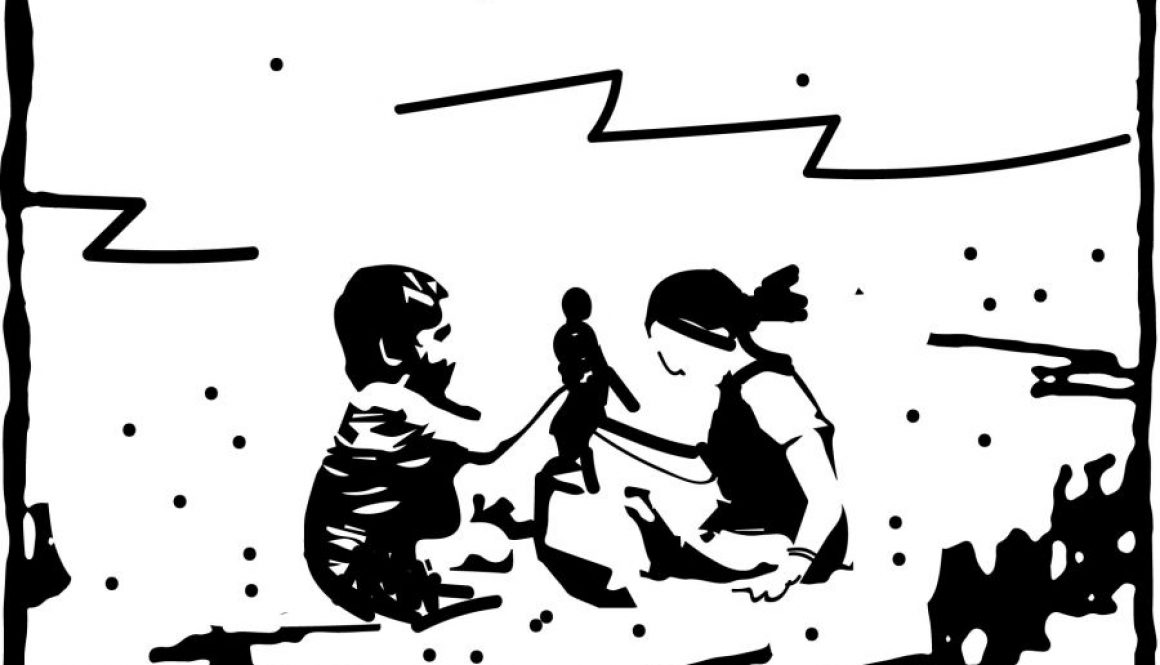
About two kilometres from the town centre, in a small Buddhist neighbourhood, five-year-old Asma Banu is bending over a heap of mud her playmate, Kyaw Thu, has been piling up, sitting outside the latter’s tin-shed house near the Alodawpyei Monastery.
Unlike other Buddhist families in the area, Kyaw’s mother allows her son to play with the maid’s daughter, Asma. Besides, she has just given birth to a daughter herself and her husband is out of town on business. Too weak to look after both the children all by herself, the landlady insists her household help Mariam stay with her for a few days, instead of going back to the slum in the Muslim neighbourhood. Mariam’s husband, Rafique Ali, does not live with his family. He works in the bordering country of Bangladesh, as it is too difficult for poor Rohingya men to make a decent living in any part of Myanmar–– especially since the military coup of 1962. However, four years ago, Rafique managed to obtain a job at a beach resort in Cox’s Bazar as a janitor; leveraging his ancestral link to the adopting country. A year ago, Mariam received some tragic news from an acquaintance, who also works in Bangladesh and has a family living in Maungdaw. She heard that Rafique got married to some Bengali woman and settled down permanently in Bangladesh. Mariam has not heard from him ever since.
The two children have been gathering clay since morning from their neighbourhood to fashion dolls out of them. At first, Kyaw was not very interested to participate in his playmate’s little endeavour. But Asma’s constant cajoling convinces him to lend her a hand on one condition––Kyaw would only collect dry soil because, he did not enjoy playing with mud and did not want to get his clothes spoiled. Asma accepted Kyaw’s terms delightfully. Later, while looking for the raw material for their little experiment, Kyaw realises that since it is June and it has been pouring constantly for the past few days, it is almost impossible to come across any dry soil in the region. But as he has made a pact and is well-acquainted with Asma’s stubborn temperament, Kyaw is left with no other choice but to quietly carry out the messy task.
Asma does not mind sitting on the damp ground on the roadside with her hands and feet caked in mud, and sieving the tiny pieces of rubble out of the mound her friend has been gathering.
With a smudge of yellow paste, made from Thakana bark, smeared on her cheeks––which Mariam always applies on Asma to prevent sunburn––she moulds human-like figures, as she takes in her surroundings.
She observes three young monks, clad in orange drapes, standing under a nearby lamp post, salivating while watching a street vendor cook Mohinga5, impatient to taste the spicy dish. The girl then notices a shepherd crossing her, struggling to harness a herd of sheep, which are constantly being distracted by the roadside turf, and occasionally by engine-run three-wheelers speeding past them. Asma can even hear the clamour of some female fishmongers, gathered two blocks from her in one corner of the crooked road with live fish in buckets, trying to lure customers with their distinct calls. Besides this racket, Asma can hear the distant chanting of Tripitaka6 by monks at the nearby monastery, which has been buzzing like swarming bees. However, the child is not at all bothered by all the diversions, since such sights and commotions are parts of her everyday life.
Every now and then, Asma steals a quick glance at the sloping road to check where Kyaw is. After waiting for a while and grumbling to herself, she can finally see her playmate climbing up the muddy road––balancing his stout self, avoiding the potholes on the crooked road––plodding towards her.
“That’s it!” blurts out Kyaw, irritably. “This is the last pile of filth I will carry today. I can’t do this anymore! It’s just too much labour for one person.”
Asma brushes away the stray hair from her forehead and looks up at the boy. She sees her friend drenched in sweat, struggling with a big chunk of mud with his chest rising and falling, while he gasps for air. Despite being aware of his irritable tone, Asma says,
“I’ve got enough mud to build a temple like the one in the neighbourhood. You did not have to bring the last mound!”
Stupefied by this remark, the boy gapes at her, while his cheeks turn red. Out of frustration, he drops his bulky load of mud a few inches from Asma and screams out for Mariam.
At that moment, Mariam is washing clothes in the backyard bathroom of the house. As soon as she hears the cry, she knows that her daughter must be troubling her young master again. So, leaving the laundry behind, she runs out of the house with soap on her hands, following the trail of the wail.
Finding both the children blanketed in a thick coat of mud, and seeing Kyaw fuming, Mariam turns to her daughter.
“Damn you, Asma! How many times do I have to tell you not to drag this poor boy into your wicked plots?” Asma continues her work, undeterred, with her head down.
“Look at the boy! What have you made him do to his clothes? Now who is going to wash them? Are you listening to me, you little brat?” asks the woman and slaps her daughter on the back of her head.
“I made him do nothing Amma!” Asma cried defiantly. “He’s done this to himself willingly. Besides, he should stretch his hands and feet once in a while, rather than sit idle all day!”
“Put a lid on it, you witch!” retorts Mariam, jerking her daughter’s elbow. “I’ve been noticing lately, your tongue is getting as sharp as a snake’s fang. If I find you messing with young master one more time, I will make sure you don’t get a single bowl of rice from this household. Mark my words!”
With this warning, the woman takes the boy with her, while Asma redirects her attention back to sculpting.
Once the girl is done shaping her dolls, she breaks a twig from a shrub, which has sprouted up along the entrance, to draw their faces. Asma made two dolls––one in the reflection of her playmate, the other her own. She even wraps them up with colourful pieces of torn cloth, which she has smuggled from her mother’s trunk.
While putting the final touch on her dolls, a puzzling sight grabs Asma’s attention. She notices wisps of smoke swirling up to the sky, beyond the rear of the neighbourhood. At first, she does not bother much, assuming, some shopkeeper on the main road must be burning his garbage. But after a while, when the smog starts to engulf the northern horizon, it contrasts with the natural colour of the sky and intrigues the girl. As she gets up to her feet, Asma is now able to see the thread of smoke taking the shape of a bulging mushroom. Leaving the dolls at the gate, Asma strolls down the muddy road, passing by the dilapidated houses of the neighbourhood. After a short journey, she halts at the winding end of the road, under a clump of trees.
Standing a few yards away, Asma sees something she has never witnessed before. A crowd of men with bamboo sticks in their hands are chasing people off the main road. Before Asma can understand what the frenzy is all about, the girl discovers another gang setting some stores on fire. Horror-struck, Asma stands there motionless, witnessing people screaming and running hysterically in every direction. When it seems things cannot get any worse, she is suddenly faced with an outlandish sight. She notices a bearded man––with a turban wrapped around his head––dragging a young monk across the gravelled road. The monk, who is entangled in his own robe, is desperately trying to get out of it. But before the bhikku7 can cheat his fate, the middle-aged man reveals a small dagger from underneath his kurta.
At this point, Asma involuntarily turns her head sideways with absolute apprehension. Laying the boy on his bare chest and tilting his head backward, the man draws the dagger and slits the boy’s throat open. Within seconds, blood starts gushing out of the teenager’s throat, while his body writhes and flails about. Incredulous about what has just happened before her eyes, Asma finds herself in a state of delirium.
Meanwhile, as the murderer shifts his glare from the corpse and slowly turns around, his vigilant eyes fall on the girl. Asma can see hatred spewing out of his volcanic eyes with a passion to destroy everything in his way.
While drops of blood from the victim’s body trickle down the man’s bushy beard, he takes a step forward. Pointing his dagger at her, he bursts out into a roar. The menacing look on the man’s face sends a shiver throughout Asma’s body, which nudges her out of her trance. Without squandering another moment, Asma turns around with a piercing shriek and scrambles to her feet.
The child keeps running at lightning speed, dodging all the people along the way, until she returns to the Buddhist community. Only a few blocks away from Kyaw’s house, Asma comes across an unattended herd of sheep, running and bleating cluelessly along the crooked road. She wonders what has become of the shepherd? Then a little farther up the slope, as she picks up her pace, Asma discovers fish scattered on the muddy road, without any trace of the fishmongers. The sight makes her pause for a moment and contemplate: where did everyone go? After passing two more houses and before entering hers, Asma cannot help but notice a bowl of Mohinga strewn under the lamp post, but with no one around to claim it.
However, all these mysteries seem too insignificant to her in comparison to the terrifying images of the murder, which is still flashing before her eyes. With the wooden gate of the house still open, Asma swoops inside, trampling over the delicate dolls she had made with so much care. The porch of the house leads the girl straight to the sitting room.
As soon as Asma enters the room, she feels something sharp biting her left toe. The girl lets out a piercing shriek. As she bends forward and twists her toe upwards, Asma realises that a broken piece of glass has lodged itself to the bottom of her foot. It seems like a deep cut. But having no time to brood over such a trifling matter, Asma clenches her teeth and plucks out the tiny piece of glass, then flings it out of her way. After that, once she gets the chance to look around the room carefully, the girl discovers that all the furniture is out of place. The four bamboo stools, which used to stand in the centre of the room, are lying here and there with the table in the middle upside down. And the costly flower vase, which Kyaw’s father had brought from Yangon last summer, is now strewn all over the floor in tiny pieces. Now she knows where that piece of broken glass has come from. Inspecting the disarrayed furniture, an unknown fear grasps Asma’s heart.
“Amma…” whimpers the girl, “…where are you?”
She stands there waiting for an answer to come from the other room. But there is no reply. Asma notices a cold silence lingering throughout the house. Even the chanting of monks at the nearby monastery cannot be heard anymore.
As the girl limps her way forward through the shadowy corridor leading to the landlady’s bedroom, she comes across a desolate rubber-duck, lying on the floor. Asma picks it up and recalls the day when the landlord had brought it for the newborn, over which Kyaw and Asma had quarrelled because whoever had the privilege to take it to the baby would also be the person to get to play with it. As Asma dwells in past memories, she suddenly hears a muffled groan coming from the bedroom.
“Kyaw, is that you?” cries the girl, both angry and scared. But again, she is only met with prolonged silence.
Whenever Asma would play hide and seek with the boy, her mother would help Kyaw hide. Seeing the door to the next room ajar, the small girl assumes that her mother and playmate are trying to get back at her for vexing the boy earlier.
So without much hesitation, the girl walks into the room, unannounced.
At first sight, the child sees her mother lying on the bed, face down, with a stranger holding down her hands from one corner of the bed, while a bald man––sitting on top of her—is thrusting his body against hers. Being so young, Asma cannot fathom exactly what is going on. But witnessing her mother being forced to do something she was desperately trying to resist, Asma loses her voice.
Soon after, noticing the presence of the girl in the room, the man who has been holding Mariam’s hands, barks out –
“Hey…what are you doing here?”
This is when Mariam’s attention is drawn towards her daughter. The moment she sees Asma, the mother knows that if the assailants get their hands on her daughter, they won’t spare her either.
As the man, standing by Mariam, loosens his grip on her and tries to pick up his hatchet lying on the floor, Mariam jerks her body and, retrieving one of her legs from underneath her tormentor, she knocks down the guy on top of her with whatever strength is left in her battered body. Losing his balance, the bald man falls on one side of the bed and bumps his head against a wooden cupboard. While the man rolls on the ground, screaming in pain, Asma gets a glimpse of the man’s face and recognises him right away. It is the bhikkhu who teaches at Alodawpyei Monastery, where Kyaw would go to learn Pāli Canon8. Meanwhile, having picked up his weapon, as the other man attempts to swing it at the girl, Mariam abruptly grabs the throttle of the axe with her bare hands. Now, as the villain tries to reclaim his weapon, the mother turns to her daughter and yells at the top of her lungs –
“Asmaaa…!”
The little girl shifts her attention back to her mother.
“Run Asma run…save yourself!”
As her mother’s words begin to settle in Asma’s tumultuous mind, the girl’s eyes wander around the room and stops at the back door, which is closed from inside.
When Mariam repeats herself, the man struggling with her, tries to immobilise her by planting his bare knuckles on her back repeatedly.
In the middle of all the chaos, Asma finally motions towards the back door, and, leaping over the man on the floor, tries to reach the bolt on the bottom of the door.
At first, the girl struggles to lift the rusty metal bolt, which is firmly stuck in its chamber. Then suddenly, she feels a thick hand grabbing her wounded foot, causing Asma to scream. Lying on his chest, the monk now tries to stop her from escaping.
Initially, Asma jerks her leg to get rid of him. But, realising her strength is no match for a grown up, Asma soon withdraws and starts looking for an alternative.
At that moment, the girl spots a kerosene-lantern hanging on the wall, a few inches from the door frame. With the monk holding her leg firmly and pulling her towards him, Asma tries to reach for the lantern with the intention of striking him with it. She makes an attempt to grab it, but misses by an inch. But feeling the villain’s tenacious hands gaining on her, Asma pokes the man in his right eye out of sheer desperation.
Having played with clay all day, the mud on Asma’s fingers has dried up and now proved to be quite lethal.
The man immediately releases Asma’s foot, as he falls on his back, all the while howling from the excruciating pain. Availing this opportunity, the child manages to yank the bolt out of its chamber, and opening the door with a thrust, she finally gets out on to the backyard.
As soon as she leaps out of the room, Asma shuts the door and locks it from outside by drawing the wooden latch attached to the door. The flimsy latch, which has endured many monsoons in it lifetime, can snap any moment. Though free to flee from there, Asma now faces a new obstacle.
The house is demarcated with brick-lain walls to prevent cattle and wild hogs from barging in and carrying out a rampage. Though the walls are not that tall and any grown up can climb them, for a girl of Asma’s age they are still difficult to climb. Reflecting over her other options, Asma sweeps her surroundings rigorously.
In one corner of the backyard lies a thatched kitchen, and in the other, a tin-shed bathroom. In the kitchen, Asma can see a bowl of rice is mounted on the mud stove with boiling rice-water spilling out, subduing the flickering flame underneath. Beside it is a small bowl of vegetables––marinated with turmeric and spices and a hand-fan rests next to it. Asma’s eyes briefly stall on the hand-fan. It is made from the leaf of a palm tree; she recalls seeing her landlady using it to kindle dried lumber, whenever she cooks.
At that very instant, the two men starts hammering and kicking the door from the other side. With adrenaline pumping through her muscles, Asma leaps forward. Throwing her hands up, she tries to reach the ledge of the wall. But then, suddenly, the thumping on the door stops and a fearful scream is heard from inside the house.
Asma turns around, breathless––for she knows the voice too well.
With her gaze fixed to the door, tears glistening in her eyes, she mumbles –
“Amma…noooo…!”
Before the child is spared the time to fully articulate the loss she has just suffered, the culprits now start hacking the door with their hatchet.
Prompted by some survival instinct, Asma rushes towards the bathroom and locks herself inside it. It is a small room with a tube-well pump and an Indian commode in it, where the members of the house bathe, do their laundry and wash their utensils. The walls of the bathroom stand on cemented-bricks, while the door is framed with a thick layer of steel with a bolt welded to it to lock the door from inside.
Despite the fortified shelter within which the girl takes refuge, Asma’s heart continues to race at a train’s speed, since she can hear the sound of wood chips being flung on the floor, as the goons carry on with their hacking. It does not take the two men long to tear a hole in the door and break out of the house.
Sensing the pair prowling around and sniffing for her scent like savage predators, the child steps away from the door and huddles up in a dark corner. On her way in, Asma forgets to turn the light on. Her eyes now grope in the dark with her ears erect, close to the walls.
“Where did she go?” asks a raucous voice.
“Shush…I think she crossed the boundary and escaped” says another voice, deep and cold. “Let’s get the hell out of here before she gets some help!”
And the girl listens to their footsteps trotting back to the house and receding in the distance.
Sensing that the murderers have left the house, Asma’s pounding heart slows down; bit by bit. Relaxing her clenched muscles, the child eventually sprawls down on what appeared to her to be a heap of soaked laundry.
As the withered sun reclines towards the western sky, its pale ray now peeps through the small holes of the tin-shed ceiling. Feeling the warm shaft of light that beams down on Asma’s head, the child raises her moist eyelids and looks up at it, as if the light is trying to convey to her a message of resurrection.
Gathering her dwindling courage, as she tries to get up from crouching on the wet floor, Asma’s hands suddenly slip away from beneath her. And then, she notices that the lower part of her body is smeared in some kind of sticky slime. Roused by curiosity, Asma starts fumbling through the pile with her bare hands. As soon as she realises what the heap is actually made of, she springs up to her feet with alarm and hurriedly opens the door. She stumbles out of the shadowy chamber.
She rushes out of the bathroom, and the flash of the afternoon sun sabotages Asma’s sight, making her feel dizzy. After taking a moment to retrieve her poise, the girl peers down to inspect her hands and feet. Asma finds that she is drenched in blood.
With her slender frame quivering, Asma slowly turns back, and takes a peek inside the bathroom. She now discovers the dead bodies of Kyaw, his mother and the infant piled up in a dark corner. An acute feeling of grief seeps through her heart.
Next to her mother, the only people she considered to be family are now lying before her, decapitated. Unable to contain her sorrow, Asma falls down on her knees and starts clawing the muddy ground beneath her, howling like a wounded cub.
Before the night creeps up, the bosom of the earth and darkness invades the small town of Maungdaw, the dissipating sun glimmers down on the child––one last time. While the traumatised girl cries her wounded heart out, uttering gibberish and choking up, Asma feels a light tremor on the ground. As though, someone is moving behind her.
Slumped on the ground with the sun behind her, Asma raises her head with a lot of effort to discover two dark shadows looming in front of her…